Showing posts with label depression. Show all posts

Wednesday, January 14, 2015

My Love/Hate Relationship With Food Since My Diagnosis

This is a hard thing for me to talk about and a post I had been dreading for awhile. Maybe even more so than the pain itself. It wasn't until a few months ago that I could even say the word "weight" without starting to cry. I have gone up and down on the scale in the past but never like this. Once I got into my college routine I naturally lost enough weight to a point where I was incredibly comfortable with where I was. I walked (read as: pretty much ran) miles a day and was too busy to snack. At my smallest I was a size 4. Before my pain started, as long as I was continuing to run around like a mad woman, I could eat what I want and manage to maintain.


I think it first started when I was working after graduation in my new job. I was so physically and mentally exhausted from my job that I just ordered take out all the time. After I was diagnosed and my pain hit me like a ton of bricks, food became even trickier for me. After I was disability from work, I couldn't grocery shop or stand long enough to cook anything I bought so I needed to eat things that were instant and continued the take out trend.


Even once I moved home, I solely relied on my parents all of my food. Days that I had major, major pain, I told myself I deserved it and ate literally anything and everything with little to no exercise or even mobility. There were months I couldn't move- period. It was a good day if I made it up the stairs.  Naturally, 2 years in, I went from a size 6 to a 14 and gained 50lbs. It's still hard for me. I've received a general amount of pressure from my weight gain--when I gained my most weight I was self conscious about people seeing me eat.


But once the pain kicked, that was it. I used food as crutch and I was fully aware of it. I didn't care if it wasn't good for me because good food made me happy and I figured once I was "better", I would lose the weight. Good plan, right? (Side note: I love cooking/baking/eating in general. I am a huge foodie and at one point in college I seriously considered being a food stylist.) It was my only form of control I felt like I had on my worst days. At that point, I couldn't control my pain and I just felt lost. I had a closet full of clothes that didn't fit. On any given day with pain (which was most of them), I would say to myself "I deserve ice cream for dealing with this shit." Or mashed potatoes. Or anything. I just wanted so badly to feel comfortable.


If I had pain and was hungry, at least I knew I could solve my hunger. If I could physically make it out to a restaurant (rare), I went buck wild and ordered the most ridiculous thing I could fathom, usually including apps, entrees and dessert. In my old days, if I had gotten to this point weight wise, I'd be dieting and doing serious gym time. But once I was diagnosed, I had masked my depression with cooking and baking when I was able to.

Limitations are still my problem. I can plan a week's worth of meals, feel good, go out and buy the groceries and then have 3 bad days after that. By that time, all my groceries would go bad. I've also had to take into consideration things like hypoglycemia (caused by my trigger points) requiring me to eat every 2-4 hours (which I'm still not used to) or my whole body starts shaking, sweating and I start to throw up. With the severity of my acid reflux, I have a STRONG sense of smell since my nose surgery and there are certain foods that even if I smell, I throw up. I've been working for months to figure out how to make a good salad dressing because every single dressing in the grocery store has vinegar/mustard, which is another ingredient I've had strong reactions too. I've cut alcohol (which I never drank much in the first place) soda, and coffee out of my diet. There will be another post on this, but alcohol was not just cut out of my diet for GERD purposes---it dehydrates my body/muscles and made my pain worse.

Now I need to have healthy meals/snacks consistently (which sounds easy, but I always thought I was invincible and skipped meals if I got too busy) and watch things that trigger my acid reflux. The other major issue has always been my over-ambitiousness to lose the weight--I would work out so hard that I would hurt myself. This would cause me to be bedridden from days to weeks. Because of my low blood pressure from hypermobility, I also get extremely dizzy so I also need to keep a lot of salt in my diet.

Now that I am slowly getting better, I am starting to see a difference. I've seen a dietician several times and now have a personal trainer who specializes in chronic pain. My trainer is helping significantly and I am finally starting to get excited about going to work out! I'm start understand what's hurting, when and what I can do for it, but most importantly when I'm doing too much.

I've recognized things I naturally gravitate to (like bagels and ice cream) and substitute them for quick, healthier things that are still fast to make. As much as I can (with the exception of injection days), I am aiming to eat as many non-processed, whole foods with high fiber as possible. The high fiber helps with IBS. Like I mentioned previously, I don't eat anything with vinegar, coffee or alcohol anymore. Most of my key items: almond milk, organic high fiber cereal, heathy muffins, green smoothies, apples, salads, soup, fish, "healthy" desserts, hot lemon water, veggie omelets, whole grain e'erythang, popcorn, eggs, slow cooker steele cut oats, organic yogurt, a shit ton of water and tea and as many fruits and veggies as I can stand by slowly cooking them into other things, you get it. Substituting doesn't feel like I'm constantly sacrificing what I like and I don't want to deprive myself. I also try and cut down my portions.

I make a lot of different things all the time now but these are some of my go to fast and yummy recipes (most of the stuff I eat now doesn't need to be cooked since I am slowly working towards my whole foods goal):


Turkey Meatball Soup with Spinach and Farro (sometimes replace the farro with barley because Hershey's a shithole and sometimes doesn't have it) but this is a very good and filling lunch

Deep Dish Cookie Pie- this girl's healthy dessert blog is AMAZING--this recipe has a ton of chickpeas in it and is my favorite healthy dessert. So much fiber, I can't even handle it. 

Amazing Grass Green Superfood Berry- this is a great green supplement smoothie that I had 2 oz of water, 6 oz of orange juice and 3/4 of a banana too. Great for breakfast. Obviously, a green smoothie with real fruits and veggies would be better, but this is easier for me so it stays for now.

Slow Cooker Apple Pie Steele Cut Oats- this is super easy to make ahead of time and last for awhile.

Pumpkin Cream Muffins- only 75 calories and delicious, seriously...


Spinach and Mushroom Quinoa- quinoa doesn't always cook as fast as I'd like it to but this makes a pretty good pilaf style side dish

Roasted Shrimp Quinoa Spring Rolls- these are a little messy (the quinoa falls out) and hard to eat but totally delicious and worth it.

Banana Oatmeal Chocolate Chip Muffins- easy, yummy, GF, what more could you ask for?


I've finally got a good salad dressing and I'm going to start experimenting with other healthy desserts and veggie noodles like zucchini and sweet potatoes. 

Have a good evening. :) 


Sunday, December 14, 2014

Great Link for How to Understand Someone With Chronic Pain

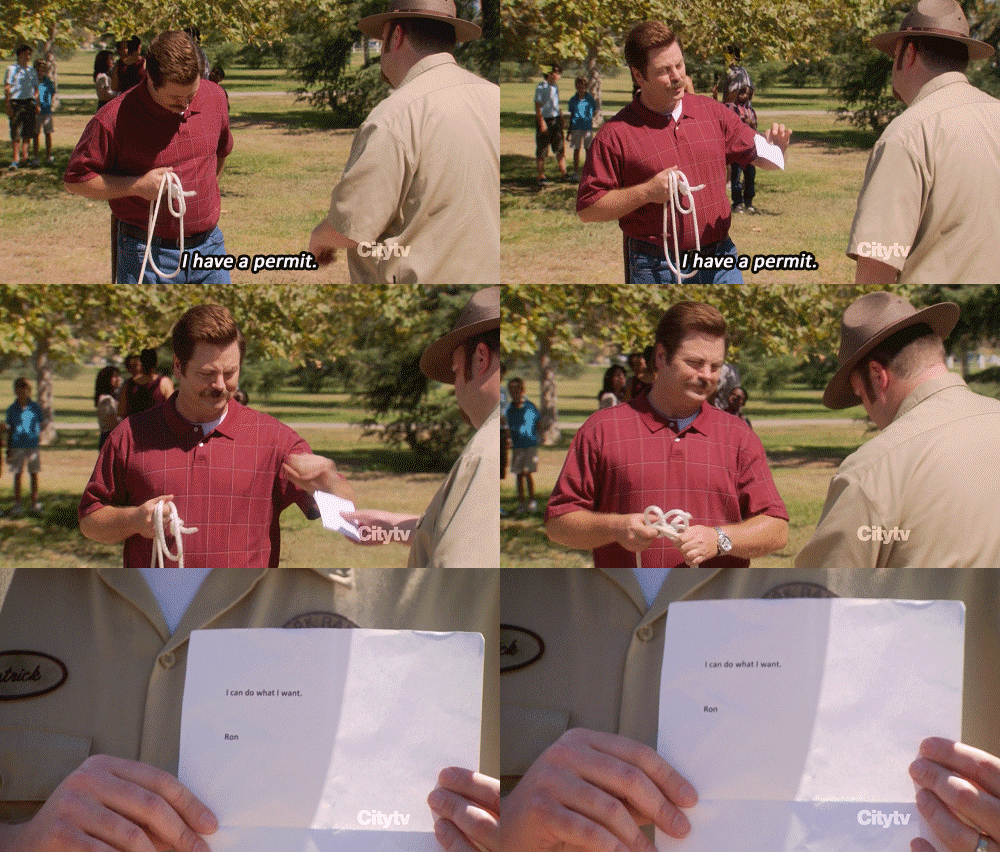
Great Wikihow article to share with family and friends.  I added my own GIFs/pics for entertainment value.


1
Remember that being sick does not mean that the sufferer is no longer a human being. Chronic pain sufferers spend the majority of their day in considerable pain. If one visits or lives with a chronic pain sufferer, the chronic pain sufferer may be unable to enjoy things they used to enjoy. The chronic pain sufferer remains aware, and desires to do what they used to perform. The chronic pain sufferer feels as if they are stuck inside a body in which they have little or no control. They still want to enjoy work, family, friends and leisure activities, however much pain puts that enjoyment out of reach.


Learn the code. Chronic pain sufferers will often talk differently from people free of constant pain. A numeric pain scale is used as a quantitative measure for identification of intensity for pain so the health care providers can measure effects of treatments. The measure describes pain on a scale from 1 to 10; the 1 is "no pain at all, feel wonderful" and 10 is the "worst pain ever felt." Do not assume the chronic pain sufferer is not experiencing pain when they say that they are fine. The chronic pain sufferer attempts to hide the pain due to lack of understanding in others. Accept that words may be inadequate to describe how the sufferer is feeling. Recall a time when you experienced pain, then multiply the intensity and attempt to imagine that pain present twenty-four hours a day, every day, without relief, and then think about this happening for the rest of your life! It's hard to find the words for that sort of pain.


3
Recognize the difference between "happiness" and "healthy". When you have the flu, you probably have felt miserable. Chronic pain sufferers have experienced pain from 6 months to many years. Pain has caused them to adopt coping mechanisms that are not necessarily reflecting the real level of pain they feel.
  • Respect that the person who is in pain is trying their best. When the chronic pain sufferer says they are in pain - they are! They are merely coping, sounding happy, and trying to look normal.
  • Look for the signs of pain: grimacing, restlessness, irritability, mood swings, wringing of hands, moaning, sleep disturbance, teeth grinding, poor concentration, decreased activity, and perhaps even writing down suicidal thoughts or language.[1]


4
Listen. The previous two steps made it clear that chronic pain sufferers can speak in code or make their pain seem lighter than the reality. The next best thing that you can do is to listen to them properly, and to make it clear that you both want to hear what they have to say and that you really have heard it. Use your listening skills to decode what they're hiding or minimizing.


5
Understand and respect the chronic pain sufferer's physical limitations. Being able to stand up for ten minutes doesn't necessarily mean that the sufferer can stand up for twenty minutes, or an hour, or give you a repeat performance whenever. Just because the person managed to stand up for thirty minutes yesterday doesn't imply that they will be able to do the same today. With a lot of diseases, a person may exhibit obvious signs of immobility, such as paralysis, or total immobilization due to weakness, etc. With chronic pain however, it is confusing to both the sufferer and the onlooker, and their ability to cope with movement can be like a yo-yo. The sufferer may not know, from day-to-day, how they are going to feel when they wake up, and each day has to be taken as it comes. In many cases, they don't know from minute to minute. That is one of the hardest and most frustrating components of chronic pain.
  • Insert "sitting", "walking", "thinking", "concentrating", "being sociable" and so on, to this step, as the curtailment on a sufferer's ability to be responsive applies toeverything that you'd expect a person in good health to be able to do. That's what chronic pain does to its sufferers.


6
Leave your "pep talk" for your kids and your gym buddies. Realizing that chronic pain is variable, keep in mind that a pep talk can be aggravating and demoralizing for the chronic pain sufferer. As already noted, it's quite possible (for many, it's common) that one day they're able to walk to the park and back, while the next day they'll have trouble getting to the next room. Therefore, it's vital that you don't fall into the trap of saying: "But you did it before!" or "Oh, come on, I know you can do this!" If you want them to do something, then ask if they can, and respect their answer.
  • Get over the need to give platitudes about the value of exercising and fresh air. For a chronic pain sufferer, "getting out and doing things" does not make the pain vanish and can often exacerbate the problems. Bear in mind that you don't know what they go through or how they suffer in their own private time. Telling them that they need to exercise, or do some things to "get their mind off of it", may frustrate them to tears, and is not correct advice, especially if you're not medically trained and haven't got a clue. If they were capable of doing some things any or all of the time, they would.
  • Remember that chronic pain sufferers are constantly working with doctors and striving to improve and do the right things for their illness. Another statement that hurts is, "You just need to push yourself more, try harder". Obviously, chronic pain can deal with the whole body, or be localized to specific areas. Sometimes participating in a single activity for a short or a long period of time can cause more damage and physical pain; not to mention the recovery time, which can be intense. You can't always read it on their face or in their body language. Also, chronic pain may cause secondary depression (wouldn't you get depressed and down if you were hurting constantly for months or years?), but it is not created by depression.


7
Never use throwaway lines. Assuming you know best by making such statements as "Ah well, that's life, you'll just have to deal with it", or "You'll get over it eventually. Until then, you'll just have to do your best", or worst of all, "Well, you look well enough", etc., are lines that might make you feel done and dusted with the topic but they are both a form of distancing yourself from the person and making the sufferer feel worse and out of hope.[2] Psychologist Mark Grant suggests that you throw lifelines rather than throwaway lines, by saying something like: "So how have you survived?"[3]
  • Admit it when you don't have answers. Don't paper over your ignorance with platitudes or bold allegations not based on fact. There is no harm in saying "I don't know" and then offering to find things out.


8
Check your own patience. If you're impatient and want them to "just get on with it", you risk laying a guilt trip on the person who is suffering from pain and undermining their determination to cope. They probably have the will to comply with your requests to go out and about with them but have neither the strength nor the coping capacity as a result of the pain.
  • A chronic pain sufferer may need to cancel a previous commitment at the last minute. If this happens, please do not take it personally. If you are able, please try to always remember how very lucky you are, to be physically able to do all of the things that you can do.
  • Be very understanding if the chronic pain sufferer says they have to sit down, lie down, stay in bed, or take these pills right now. It probably means that they do have no choice but to do it right now, and it can't be put off or forgotten just because they happen to be somewhere, or they're right in the middle of doing something. Chronic pain does not forgive, nor does it wait for anyone.

9
Be sensitive when suggesting medicines or alternative treatments.Prescription drugs, over-the-counter medicines and alternative therapies can have side effects and unintended consequences. Some may not appreciate suggestions, and it's not because they don't want to get well. They may have heard of it or tried it already or some may not be ready to cope with new treatment that can create an additional burden on their already over-burdened lives. Treatments that haven't worked carry the emotional pain of failure, which in and of itself can make the person feel even lower. Of course, if there were something that cured, or even helped people with a particular form of chronic pain, then they should be made aware of it. There is worldwide networking (both on and off the Internet) between people with chronic pain. Those can be good resources. Be sensitive in how you bring it up.
  • On the other hand, never be afraid to ask them about how satisfied they are with their treatment. Mark Grant says that it is important to ask helpful questions about whether the chronic sufferer thinks their treatment is satisfactory or if they think their pain is bearable.[4] He suggests that people rarely ask these open-ended "helpful questions" that would help the chronic sufferer to open up and really talk.


10
Don't be put off if the chronic pain sufferer seems touchy. If that's the appearance, it's probably because they are. It's not how they try to be. As a matter of fact, they try very hard to be normal. Just try to understand. They have been going through a lot. Chronic pain is hard to understand unless you have had it. It wreaks havoc on the body and the mind. It is exhausting and exasperating. Almost all the time, they do their best to cope with this, and live their lives to the best of their ability. Just accept them as they are.


11
Be helpful. The chronic pain sufferer depends a great deal on people who are not sick to support them at home or visit them when they're too sick to go out. Sometimes they need help with shopping, cooking, or cleaning. Others may need help with their kids. They may need help getting to the doctor, or to the store. You can be their link to the "normality" of life. You can help them keep in touch with the parts of life that they miss and desperately want to undertake again.


12
Balance your career responsibilities. If you are living with a chronic pain sufferer or supporting such a person on a regular basis, you need to maintain balance in your life. If you don't take care of your own needs, health, and work-life balance, being around the chronic pain sufferer can bring you down even though you're probably trying hard not to be. Avoid suffering from carer burn-out by getting other people to help, taking time out, and curtailing your guilt trips. Care for this person as much as you're able, but also care for yourself.

TIPS: 
  • Although the person with chronic pain has changed, they think the same; remember who they are and the things they did. They are still the intelligent mind that made a good living at a job they may have loved and had no choice but to give up.
  • Pain is a difficult thing to describe to another person. It is felt personally, and it is based in both psychological and physical parts of us. The best thing you can do is to never assume that you know how it feels for that person. Sure, you know how it feels for you but each of us is different and it's impossible to get right inside a person's skin and feel their pain.
  • Don't compare health problems. Don't say I've had that before and I'm fine now. Don't tell someone with chronic pain to suck it up and do their part. It shows your lack of understanding and makes the person living with chronic pain feel like a failure that they can't handle what they are experiencing and others would do a much better job in the same situation.
  • When the ill person may finally open up to someone and are told, "call anytime", or "I'm here for you", "I will listen" only to be told later they "talk about it too much" or it's "all they talk about" they become more isolated and it becomes an impossible circle. What should they talk about? The latest beach trip they took? The new golf course they tried? Perhaps it is all they can do to get through each day, and with a family or children to care for the struggle is 100 times worse.
  • No one wants to feel this way. It's awful living with chronic pain, but it's even worse when people give up on them or misunderstand. Punishing someone for not following through with one thing or another is going to make them feel worse and show them that you really don't understand. Those experiencing chronic pain already deal with more than most could ever comprehend. Everyday life is so hard and very lonely. Constant support, positiveness, communication and of course showing your love are all crucial, because life is quite depressing day-to-day with any chronic pain.
  • Not everyone has pain every day and at the same time. It can be very stressful when the sufferer is achy one day then pretty good the next day, and maybe worse at night. You just have to understand that they can't control it and it's frustrating to them, too. Just be understanding and don't sigh and walk away.
  • Remember the pain or discomfort and the ability of a chronic pain sufferer can vary greatly even within the span of one day.
  • People who live with chronic pain know how they feel and are well aware of their situation, so avoid projecting onto the sufferer how you think they should be feeling.
  • When asked about their pain level, chronic pain sufferers may not give you their actual level of pain. Because their pain is chronic, they are used to a certain level of pain, and may just accept that as normal or no pain. They may only give you a correct pain level when they have some form of acute pain, when the "normal" level of pain that they live with daily changes, when they experience pain that now feels differently (I.e., "shooting" instead of "aching", " burning" instead of throbbing"), or when they are asked directly about their current levels of both acute and chronic pain.
  • Just learn to be a good listener; sometimes sharing silence is good; you don't have to fill every minute of conversation with words.
  • Please don't suggest another doctor, another treatment, another miracle cure or tell how someone else died from the same illness or someone else was cured. We'll smile and thank you, but it doesn't help.
  • Instead of suggesting how we 'fix' our pain, consider just being empathetic and giving them a gentle hug to let them know you're there to support them. They already hear and see endless doctors who tell them how to 'fix' or help their chronic pain.
  • Sometimes just laying your hand on the shoulder of someone helps give them comfort. Remember to be gentle. Use a soft touch, something to help them connect.
  • Truly think about all the responsibility that comes with caring for someone who is sick before dating them. Understand there is a lot to deal with and if you're even the tiniest bit hesitant, DO NOT BOTHER trying to talk yourself into it. You either are in it to be in it for it all or you need to respect yourself and them by not pushing yourself into a situation like having a relationship. It does not make you a bad person to think you can't handle caring for someone with health problems, but it does when you end up resenting them or putting guilt on them for being sick.
  • Don't forget that they are still just as normal as you, even if they have different struggles. They want to be seen and enjoyed for who they are.
  • Many people offer to help, but really aren't there when asked. You like to think you will help, and you want to be that kind of person. To some, it is simply a habit to say it; it makes you feel good about yourself but in reality you instead have a ready excuse when the request comes. Perhaps deep down you are afraid it will happen to you, and the distance you built helped you to move happily down the trail you have laid for yourself. The chronic pain sufferer no longer "fits" or "belongs" on that trail so off you go. You intend to invite them, you truly want them there, but you think or know they can't make it, they are different now, so you think "oh well, wish she could be here but she can't so..."

Wednesday, August 13, 2014

"Why the Funniest People Are Sometimes the Saddest"

After Robin Williams' death, I ended up being a lot more upset, in ways I couldn't imagine, about a celebrity I had never even met. Of course, when anyone commits suicide, it's an upsetting thing but there is something so deeply disheartening about it being a comedian.

Like I had mentioned in my "Finding the Funny" post, a good chunk of my time in New York was spent sitting at a long table in the back of Olive Tree Cafe with a bunch of comedians, in Greenwich Village, right above the Comedy Cellar. After being told myself from several comedians that I was "a dark and twisted person", I slowly realized that it wasn't just me. Several comedians have periodically joked with me that being a comedian is fucked up profession. You are literally on stage trying to make people laugh at you and I have learned that many comics are some of the deepest, darkest people I have ever met. (I am not trying overgeneralize all comedians. This is obviously through my own personal experience.) Everyone knows, and I have been told a million times myself, that humor and sarcasm are a psychological coping mechanism for depression, pain, trauma, etc.


If you take a look at Robin Williams' "rap sheet" (non professional resume), here's what you have: one failed marriage due to an affair Robin had (and was later sued by the woman he had the affair with for giving him herpes), second marriage failed to first son's nanny, third marriage to a graphic designer, major drug and alcohol abuse in the 70's and 80's, overweight and immensely shy kid until high school (read as: seriously bullied), complicated and terrifying relationship with his dad, fear of abandonment issues, plus his mom was a Christian Scientist (That alone is enough to screw you up). He's also made public quotes like these:

Such a sad quote for such a funny guy. 

I'm not saying what happened isn't heartbreaking, but I'm honestly not surprised. The next day (yesterday), several comedians (pretty much exclusively who I follow) started tweeting about depression and Jim Norton, a comic I have met on several occasions, wrote a beautiful article on TIME.com about depression in comics. (I made the title of this post his title in quotes for anyone that got confused.) Jim will be the first person to tell you he had struggled with depression and addiction and he also happens to be hilarious. In his article, he had mentioned "The funniest people I know seem to be the ones surrounded by darkness. And that's probably why they're the funniest. The deeper the pit, the more humor you need to dig yourself out of it." In his 25 years doing stand up, he has known eight comedians that have committed suicide.

Then Chris Rock tweeted/Facebooked this statement:


So then I looked into a little more and found out from Slate, that Laugh Factory, one of the biggest comedy clubs in LA, has an in house therapy program. Here's a quote from the article; "Two nights a week, comics meet with psychologists in a private office upstairs, discussing their problems while lying on a therapy couch formally owned by Groucho Marx. "Eighty percent of comedians come from a place of tragedy," explains Laugh Factory owner Jamie Masada. "They didn't get enough love. They have to overcome their battles by making people laugh."'

My point in all this--just because people are hilarious, sweet and look put together, they may be fighting some serious demons inside. Everyone is fighting a battle we know nothing about. Depression and all mental illnesses are invisible illnesses and if you haven't ever been clinically depressed yourself or know someone going through it, it can be very hard to relate to someone who is. In my bouts of dealing with my weird, painful medical issues, I have even been diagnosed with depression. People who commit suicide are not cowards, (Shepard Smith, you should be fired and punched in the face.) they are people who truly feel like if they leave, the world would truly be a better place without them.


Even though it may be frustrating to be a supportive friend or family member, try to do what you can.


Just so everyone is aware, here is a list of symptoms of depression and warning signs of suicide (from WebMD).

Symptoms of Depression:
  • difficulty concentrating, remembering details, and making decisions
  • fatigue and decreased energy
  • feelings of guilt, worthlessness and/or helplessness
  • feelings of hopelessness and/or pessimism 
  • insomnia, early morning wakefulness, or excessive sleep
  • irritability, restlessness
  • loss of interest in activities or hobbies once pleasurable, including sex
  • overeating or appetite loss
  • persistent aches or pains, headaches, cramps, digestive problems that do not ease even with treatment 
  • persistent sad, anxious or "empty" feelings 
  • thoughts of suicide, suicide attempts
Warning Signs of Suicide:
  • a sudden switch from being very sad to very calm or appearing to be happy
  • always talking or thinking about death
  • clinical depression (deep sadness, loss of interest, trouble eating and sleeping) that gets worse 
  • having a "death wish" tempting fate by taking risks that could lead to death, such as driving through red lights
  • losing interest in things one used to care about 
  • making comments about being hopeless, helpless or worthless 
  • putting affairs in order, tying up loose ends, changing a will
  • saying things like "It would be better if I wasn't here" or "I want out." 
  • talking about suicide 
  • visiting or calling people one cares about 
These signs should be taken very seriously. Call 1-800-784-2433 for a suicide hotline, contact a mental health professional right away or go to the ER for immediate treatment.

To end, here is a quote Zelda Williams (Robin's daughter) posted after his death. Rest in peace, Robin Willams. We will always remember you as the sweet, generous and gentle soul that you are. Xx